
DİKKAT !!! FOTOGRAFLARIN TÜMÜNÜ GÖRMEK İÇİN YUKARIDAKİ KIRMIZI PANOYA İKİ KEZ TIKLA
ATTENTION!!! CLICK THE RED BOARD ABOVE TWICE TO SEE ALL THE PHOTOS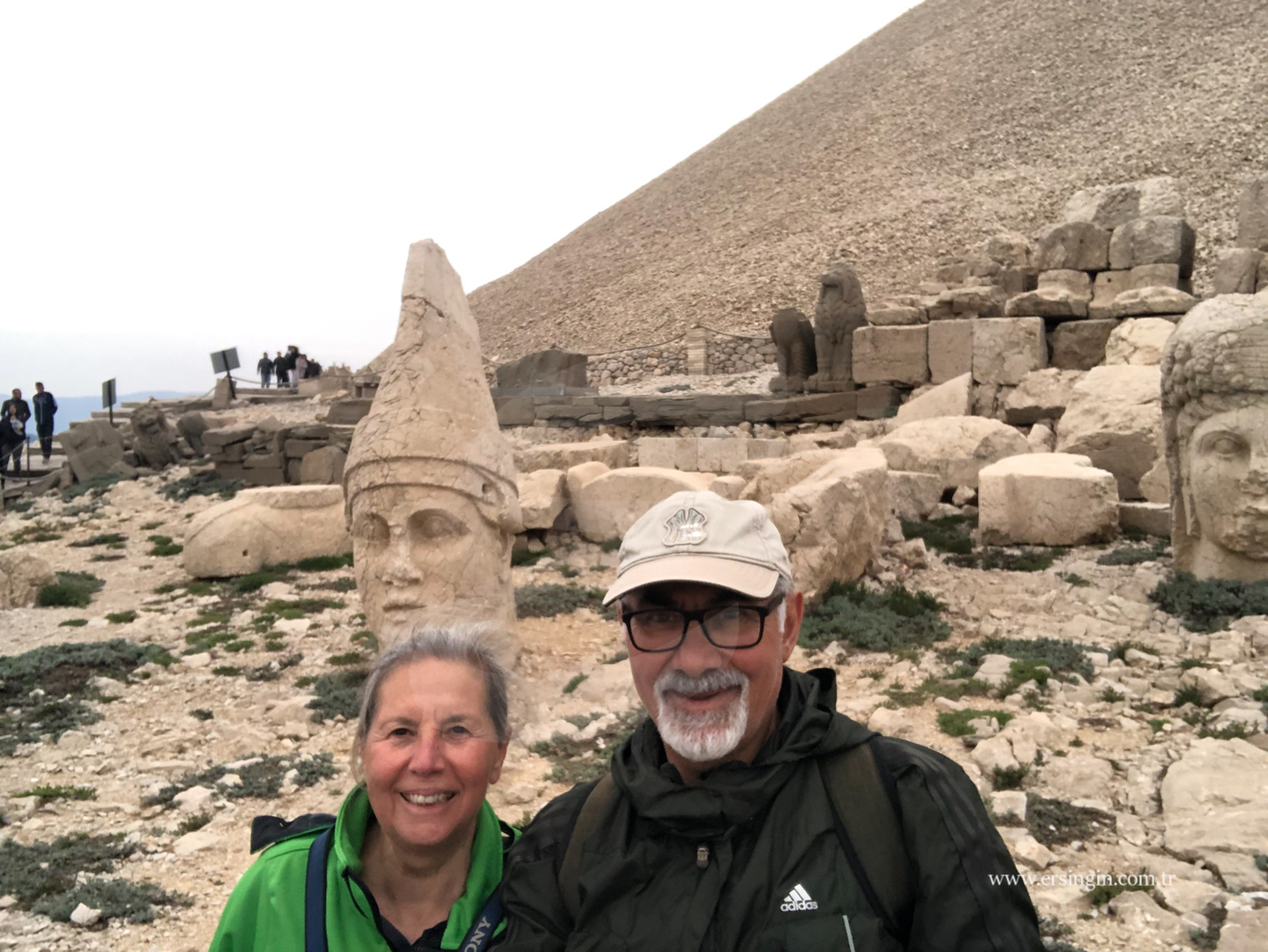
ADIYAMAN-NEMRUT DAĞI TÜMÜLÜSÜ BATI TERASI-TÜRKİYE-2022 Kod:02-04
(The English version of the information is at the end of the page.)
Değerli izleyicim, 62 fotoğraftan oluşan bu albümde, 2022 Mayıs ayında Adıyaman’da gezdiğim Nemrut Dağı Tümülüs’ünün-Batı Yakasını göreceksin. Açıklayıcı bilgiler eşliğinde Tümülüs’ü detaylarıyla değişik bakış açılarından izleyeceksin.
Nemrut Dağı Tümülüs’ü-Batı Yakası. Nemrut Dağı Tümülüs’ü, Adıyaman’ın Kahta ilçesi sınırlarında, 2.150 metre yükseklikte yer alan ve Kommagene Krallığı’nın en dikkat çekici anıt yapılarından biridir. MÖ 1. yüzyılda Kral I. Antiochos Theos tarafından inşa ettirilen bu anıt, hem dini hem de politik bir manifesto niteliği taşımaktadır. Tümülüs, kraliyet mezar odasının üzerini örten taş yığınının yanı sıra doğu, batı ve kuzeyde yer alan teraslarıyla bütüncül bir düzenleme sunar. Bu teraslar içinde özellikle Batı Terası, ikonografik zenginliği ve ritüel işleviyle ön plana çıkar.
Batı Terası, doğu terasına göre daha küçük olmakla birlikte, sembolik açıdan büyük bir önem taşır. Bu terasta, devasa tanrı heykellerinin oturur vaziyetteki gövdeleri ve kopmuş başları, düzenli bir sıra hâlinde yer almaktadır. Heykellerin başları zaman içerisinde devrilmiş olsa da bugün hâlâ etkileyici bir görsel bütünlük sunmaktadır. Burada Zeus, Apollo, Herakles ve Kommagene tanrıçası gibi Grek ve Pers kökenli figürlerin yanı sıra, Kral Antiochos’un kendi heykeli de bulunmaktadır. Bu durum, Antiochos’un kendisini tanrılarla aynı düzlemde konumlandırma çabasının açık bir göstergesidir.
Batı Terası’nın bir diğer önemli unsuru, kartal ve aslan heykelleridir. Kartal, göksel gücü ve ilahi otoriteyi simgelerken, aslan dünyevi gücü ve krallığı temsil etmektedir. Bu iki figür, Kommagene’nin kültürel sentezini oluşturan Doğu ve Batı inançlarının birleşimini yansıtır. Özellikle aslan kabartması, bilinen en eski astrolojik tasvirlerden biri olarak dikkat çeker. Bu kabartmada, gökyüzündeki yıldız ve gezegenlerin sembolik bir düzenlemesi görülür; bu da Kommagene’nin göksel inanç sistemine dair önemli ipuçları sunar.
Batı Terası, sadece dini bir alan değil, aynı zamanda siyasi bir meşruiyet mekânıdır. Antiochos’un heykelini tanrı figürleriyle yan yana yerleştirmesi, onun krallığını kutsal bir düzleme taşıma arzusunu yansıtır. Böylece Batı Terası, kraliyet ideolojisinin somutlaştığı bir anıtsal propaganda sahnesi hâline gelmiştir. Bu yönüyle, Nemrut Dağı Tümülüsü Batı Terası, Hellenistik dönem sanatının ve inanç sistemlerinin Anadolu’daki özgün bir sentezi olarak değerlendirilebilir.
Arkeolojik araştırmalar, Batı Terası’nın yalnızca bir sergi alanı olmadığını, aynı zamanda belirli ritüellerin gerçekleştirildiği bir tören mekânı olduğunu da ortaya koymaktadır. Tanrı heykellerinin önünde yapılan sunular, hem tanrılara bağlılığı hem de krallığın ilahi meşruiyetini pekiştirmekteydi. Bu bağlamda Batı Terası, dini pratikler ile politik otorite arasındaki ilişkinin mekânsal ifadesidir.
Sonuç olarak Nemrut Dağı Tümülüsü Batı Terası, Kommagene Krallığı’nın çok kültürlü yapısını ve Kral Antiochos’un evrensel iddialarını simgeleyen eşsiz bir anıt niteliğindedir. Bugün UNESCO Dünya Mirası Listesi’nde yer alan bu alan, yalnızca Adıyaman’ın değil, tüm insanlığın ortak kültürel mirası olarak kabul edilmektedir. Batı Terası’nın sanatsal, dini ve politik boyutları, hem antik dünyayı anlamak hem de kültürel çeşitliliğin tarihsel köklerini kavramak açısından son derece değerlidir.
#Adıyaman #Nemrut #commagene #nemrutdağıtumulusubatıyakası #TurkeyTravel #travelerphotography #architecture #history #unesco #ErsinGin
İletişim: This email address is being protected from spambots. You need JavaScript enabled to view it.
Instagram: https://www.instagram.com/ersin.gin
Facebook: https://www.facebook.com/ersingin
Web sayfam: http://ersingin.com.tr/
FLICKR (fotoğraf arşivim):
https://www.flickr.com/photos/192078223@N06/
Açılan sayfadan, önce You, sonra Albums başlığını tıklayarak aradığınız ülke, şehir, konu başlığına ulaşabilirsiniz.
Youtube Kanalım: Ersin Gin
https://www.youtube.com/channel/UC-GJdrmtBGNZyrTb-j6AqzA
Youtube oynatma listelerim:
1-DİVRİĞİ ULU CAMİ VE DARÜŞŞİFASI – 8 video
https://www.youtube.com/playlist?list=PLanWspj8Oxf718cj7TycIlRc2ScviuP3c
2-ANKARA RESİM VE HEYKEL MÜZESİ- 6 video
https://www.youtube.com/playlist?list=PLanWspj8Oxf57bqQHSCg9mtmZh8PmHrKy
3- HAVANA - KÜBA 3 video ve devamı gelecek.
https://www.youtube.com/playlist?list=PLanWspj8Oxf4yGLo06AmOlDa68POy6eFP
--------------------------------------------------------------------------------------------------
Dear viewer, in this album of 62 photographs, you will see the West Side of the Mount Nemrut Tumulus, which I visited in Adıyaman in May 2022. Accompanied by descriptive information, you will view the Tumulus in detail from different perspectives.
Nemrut Mountain Tumulus – West Terrace. The Nemrut Mountain Tumulus is located in the Kahta district of Adıyaman, at an altitude of 2,150 meters. It is one of the most remarkable monuments of the Kingdom of Commagene. Built in the 1st century BC by King Antiochos I Theos, the tumulus is both a religious sanctuary and a political statement. The structure consists of a stone mound covering the royal tomb and three terraces on the east, west, and north sides. Among them, the West Terrace is especially important for its symbolic meaning and unique arrangement.
Although smaller than the East Terrace, the West Terrace carries great cultural and political value. On this terrace, the huge seated statues of gods and the fallen heads can still be seen today. The heads have toppled down over time, yet they continue to create an impressive view. Here stand the figures of Zeus, Apollo, Heracles, and the goddess of Commagene, along with a statue of King Antiochos himself. The placement of the king’s statue next to the gods clearly shows his ambition to present himself on the same level as divine beings.
Another striking element of the West Terrace is the presence of eagle and lion statues. The eagle symbolizes celestial power and divine authority, while the lion represents earthly strength and kingship. These figures reflect the cultural synthesis of East and West within the Commagene Kingdom. The lion relief is particularly significant as it is considered one of the earliest known depictions of astrology. In this relief, the arrangement of stars and planets provides valuable insight into the kingdom’s religious beliefs about the cosmos.
The West Terrace was not only a sacred area but also a space of political legitimacy. By placing his own statue among the gods, Antiochos emphasized that his rule had divine approval. Thus, the terrace functioned as a monumental stage for royal propaganda, merging political authority with religious symbolism. For this reason, the Nemrut Tumulus West Terrace can be seen as a unique synthesis of Hellenistic art and belief systems in Anatolia.
Archaeological studies reveal that the West Terrace was also used for ritual practices. Offerings placed in front of the statues were part of ceremonies that reinforced both the devotion to the gods and the divine legitimacy of the king. This makes the terrace a ritual space where religion and politics were strongly connected.
In conclusion, the West Terrace of the Nemrut Tumulus represents the multicultural identity of the Commagene Kingdom and the universal ambitions of King Antiochos. Today, it is recognized as a UNESCO World Heritage site, belonging not only to Adıyaman but to all humanity. With its artistic, religious, and political aspects, the West Terrace provides an extraordinary opportunity to understand the ancient world and the deep roots of cultural diversity.
